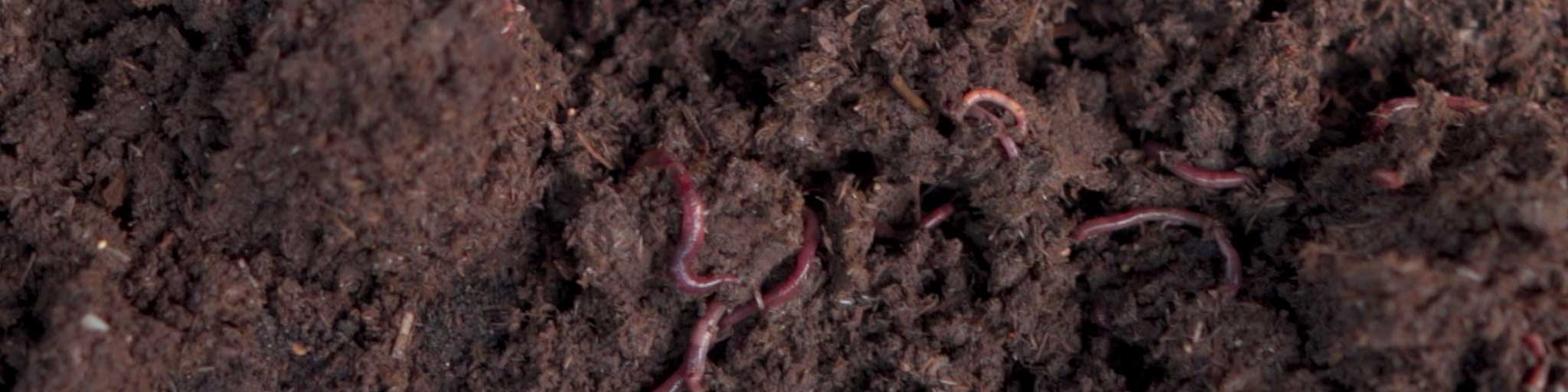
Living Soil is the basis of food security, water security, climate security and livelihood security.
As early as 5000 BC, the Vedas and Upanishad as well as other Indian literature mentioned soil as synonymous with land — the Mother — supporting and nourishing all life on earth.
The ancient Vedas recognized soil as the basis of survival:
“Upon this handful of soil our survival depends. Care for it, and it will grow our food, our fuel, our shelter and surround us with beauty. Abuse it, and the soil will collapse and die, taking humanity with it.”
Mahatma Gandhi reminds us:
“To forget how to dig the earth and tend the soil is to forget ourselves.”
Today both planet and people are facing the converging threats of climate change, natural resource depletion and ecosystem collapse. Industrial agriculture, which is supplanting the traditional forms of agriculture that have sustained human civilization for thousands of years, is a major contributor to threats like climate change and depletion of natural resources such as soil, water and biodiversity.
Today both planet and people are facing the converging threats of climate change, natural resource depletion and ecosystem collapse. Industrial agriculture, which is supplanting the traditional forms of agriculture that have sustained human civilization for thousands of years, is a major contributor to threats like climate change and depletion of natural resources such as soil, water and biodiversity.
Agriculture means the culture of taking care of the land. Unfortunately, industrial chemical agriculture has destroyed soil fertility, depleted the water holding capacity of soil, destroyed biodiversity that provides food and nutritional security and protects the soil, and contributed to 40% of the greenhouse gases that are causing climate change.
Chemical fertilizers are destroying the soil food web and the living organisms that create soil fertility, soil aggregates and help conserve water in the soil. Industrial agriculture therefore contributes to desertification and increasing drought, affecting food security and livelihood security as well as making agriculture more vulnerable to climate change.
Soil provides the basis of all plant, animal and human life on Earth. A healthy soil supports plant growth, has the ability to purify air and water and safeguards animal and human health. One cannot imagine food without soils. There can’t be healthy food without healthy soils.
Soils are vital for any ecosystem and play a key role in carbon cycles, storing and filtering water, improving resilience to different climatic conditions like floods and droughts.
After oceans, soil is the second largest carbon sink on the planet. Soil can nourish carbon-based plants and maximize carbon fixation while minimizing the release of CO₂, reversing the effects of climate change.
All of these benefits are dependent on the small fraction of soil inhabited by living organisms that comprise the soil food web. A fossil fuel driven economy, including industrial agriculture, has increased the concentration of carbon dioxide in the atmosphere to levels triggering climate instability and climate chaos.
Industrial agriculture destroys rural livelihoods and displaces rural communities, contributing to unemployment, economic insecurity and making society vulnerable to conflicts and violence.
In addition, costs of production — including hybrid and genetically engineered seeds, chemicals and irrigation — are increasing with every season, pushing farmers into debt traps and suicides. More than 300,000 farmers have given their lives in the last two decades because of debt in India alone.
In recent years, incidences of climate extremes and climate disasters have increased many fold. Climate resilience has become an economic, ecological and social imperative.
Other than climate disasters, socioeconomic disasters are also increasing year after year. Not only crop diversity but productivity of land has decreased substantially in the last four decades due to excessive use of chemical fertilizers.
A study done by Navdanya in four states of India — Uttarakhand, Sikkim, Kerala and Rajasthan — comparing monoculture and biodiversity farms clearly shows that biodiversity-based organic farming is a better choice over monoculture not only for productivity and returns but also for climate resilience.
Navdanya’s research in different agro-ecosystems — Western Rajasthan, East–South Rajasthan, Uttaranchal and Vidarbha — proves that organic farming helps sequester up to 25% more carbon, increases water holding capacity by 5–7%, increases microbial biomass by about 16–18% and enhances soil microbial activity up to 63%.
The study also confirms significant changes in beneficial soil enzymes due to organic farming.
Major benefits under paddy cultivation in Uttarakhand included increased water holding capacity, organic carbon and nutrient build-up.
Another comparative study of soil microbes and nutrients in organic and chemical farming was conducted by Navdanya across several states including Uttarakhand, Odisha, Uttar Pradesh, Rajasthan and Maharashtra where farmers practiced both systems for over five years.
Detailed studies of crops such as wheat, potato, garlic, mustard, chickpea, chilli and pumpkin showed significantly higher microbial populations under organic farming. Organic matter increased by 26–99% while chemical farming showed decline. Total nitrogen and available potassium were also higher under organic systems, demonstrating the role of organic farming in maintaining soil health.
Soil health comparisons under organic and chemical systems are described in related tables and figures.
Healthy soils are full of biodiversity. One gram of organic soil contains tens of thousands of protozoa and algae, hundreds of thousands of fungi and billions of bacteria. Soil ecosystems also include earthworms, insects and nematodes in enormous numbers.
Humus — the Latin word for living soil — is also the root of “human.” We are deeply connected to soil. When soils are healthy, societies are healthy; when soils are degraded, societies suffer.
Desertification is linked to not returning organic matter to soil. Soils rich in humus can hold up to 90% of their weight in water, making living soils major reservoirs of water and nutrients.
Healthy soils produce healthy plants. With diverse living organisms, soils generate nourishment for plants, which in turn nourish humans.
On the Navdanya farm, organic matter has increased up to 99%, and micronutrients like zinc and magnesium have increased significantly through natural biological processes driven by soil microorganisms.
Healthy soils produce healthy plants, and healthy plants nourish people.
By contrast, chemical farming has led to decline in soil nutrients, resulting in reduced nutritional quality of food.